

“If your mother says she loves you, check it out.”
That jarring statement used to hang in Chicago’s famed City News Bureau as an admonishment to reporters.
In the rough-and-tumble world of Chicago journalism, it simply meant to verify all claims with eyewitness accounts.
In reporting about the works of God, we are particularly careful on the subject of miracles. If someone has experienced dramatic healing, we’ll recount what happened and attribute it to the source:
Steve remembers waking up that day and feeling dramatically better. When a doctor examined him, she found no evidence of the tumor.
But we won’t say:
Steve woke up that day to a miracle: God had removed all traces of the tumor.
 It’s not that we don’t believe the person’s story. God can and does heal people miraculously. And if readers choose to believe that God performed a miracle in this case, based on the answers we have heard and the information we present, then so be it.
But I’ve also seen the word miracle used to label everything from a resurrection to football comebacks to finding a parking space. Which means we treat the word, and the subject, cautiously.
In his thoughtful book, Miracles, journalist Tim Stafford writes:
People exaggerate. People pass on stories without checking their facts. People eagerly report miracles when there aren’t any. …
Some Christian circles inadvertently encourage exaggeration. They create an atmosphere where Christians feel obliged to believe reports of miracles. If you express skepticism or suggest that more information is needed, they show disappointment in your lack of faith. True Christians, it seems, don’t have any doubts; they experience miracles everywhere they turn.
I’ll say it loud and clear: I believe in miracles, but I don’t believe in most reports of miracles.
We’ve chosen this approach to reporting about a supernatural event: If it’s going to be mentioned, the report needs to come from an eyewitness. Not someone who heard about it from someone else, who heard about it from someone else. If the eyewitness talks about the occurrence, we quote them or at least attribute the information to them. It’s never our “narrator’s” voice claiming the miracle, unless we have witnessed it firsthand. At least for me, that hasn’t happened yet.
This all boils down to relentlessly pursuing the truth while celebrating the works of God, and those two goals fit together quite nicely. Our source for this approach is no less than the Gospel writer Luke:
Many have undertaken to draw up an account of the things that have been fulfilled among us, just as they were handed down to us by those who from the first were eyewitnesses and servants of the word. With this in mind, since I myself have carefully investigated everything from the beginning, I too decided to write an orderly account for you, most excellent Theophilus, so that you may know the certainty of the things you have been taught. (Luke 1:1-4, NIV)
I think Luke would have liked working at City News Bureau.
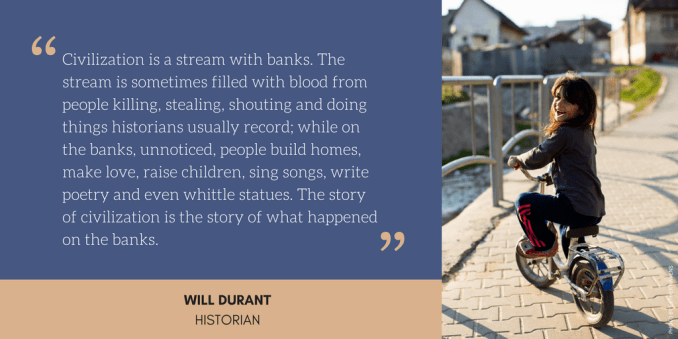
This graphic represents not only one of my favorite quotes, but also what you can create in five minutes on a website called canva.com. It’s kind of a layman’s substitute for PhotoShop and InDesign. Not nearly as versatile as those two industry-standard applications, but a nice tool for creating quick infographics, social media slides and many other visual communication pieces. You can use your own photos and illustrations, or Canva’s. Theirs usually range in price from free to a dollar or two. Then you simply download your finished product as a jpg, png or pdf.
Credit to Esther Havens for the photo, from a 2016 Seed Company story trip to Slovakia. This little girl was one of hundreds of Roma kids who play in the streets of a village called Hlinne. As we walked and dodged the joyous clamor, I thought about that Durant quote. Not much headline news ever comes from a place like this … but wonderful stories sure do.
 Reporting stories from project sites can be a wonderful trust builder among organizations and their prayer and financial partners. This requires care, because it’s just as easy to violate that trust if the people you interview or photograph are surprised by how the information gets used.
To keep those relationships healthy, here’s the process we follow at Seed Company:
Before your visit
As much as possible, communicate that you will be visiting and gathering stories. If you’re already a familiar face there, then convey specifically that you will be doing interviews and shooting photos and/or video, and how that material might be used.
During your visit
Use consent/release forms if practical (see below). At minimum, make a verbal agreement through an interpreter. Explain to everyone you interview why you are there, what information you are collecting and how you plan to use it. Field partners and people they work with tend to grant consent freely, sometimes without understanding the wide and long reach of online information. It is your responsibility to communicate this.
After your visit
Before anything is published, the field coordinator and, when possible, the field partner should review the material for accuracy and security concerns. This often involves give and take about security. The field partner always gets the last word on what may be published in print and online. No story or visual is worth damaging a partner relationship or making someone feel that their security has been violated.
After publication
The field partner should get to see the published work. When possible, send print copies and send links to online material. Knowing that the person will see the material is a good safeguard against exploiting them and their situation, or robbing someone of their dignity.
I won’t say this process is always perfect. We recently had a slip where the subject was surprised to see his photo published, and some of the information in the story was inaccurate. Something got misunderstood in translation. Once we learned of the problem we immediately took the story down and now are working with the field partner to correct the story.
Consent/release forms
When interviewing, photographing or shooting video of people on project sites, it’s a great idea to have consent/release forms handy. Here’s what the Seed Company’s form says:
I hereby give and grant to Seed Company the right to use my name and/or the right to photograph or videotape my physical likeness in any manner whatsoever and/or the right to reproduce and record my voice and other sound effects made by me. Also, I hereby consent to the use of my name, my comments and/or the recordings and reproductions of my voice and other sound effects, by Seed Company, their licensees, successors and assigns, in or in connection with the production, exhibition, distribution, advertising and exploitation and/or other use of any Seed Company’s print publications, websites, social media, events and/or otherwise.
Name:
Signature:
Address:
Telephone and/or email:If under age 18, parent or guardian:
Signature:
We don’t always use these forms, especially in contexts where the people don’t speak English and would not know what they are signing. If possible before your trip, get the form translated into the local language. Sometimes, especially in extremely remote areas or oral cultures, a verbal agreement is enough. Simply make sure the person understands and agrees to how we are going to use the material. We also work closely with our field coordinators on this, so neither they nor the partner are ever surprised by what’s published.
Photos from sensitive places pose a challenge in telling stories. While conversations often center on creative ways to shoot a photo, or how to obscure someone’s face or location, one important factor tends to be neglected.
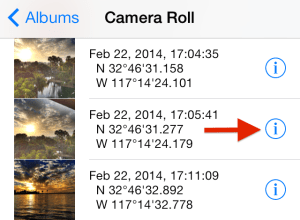
Digital photos have invisible fingerprints. It’s called metadata and it includes a long list of information about the exposure, the time the photo was taken … and the exact place, called the geotag. If someone downloads your photo, they can quickly see all of that information.
Most of today’s smartphones and many digital cameras have this GPS-based feature. This article explains how to find geotags on existing photos.
The best way to avoid this problem is to make sure GPS information is never recorded.
To turn off geotagging:
iPhone: Settings > Privacy > Location Services > Camera > choose “Never,” for regarding location access.
To remove geotags from existing photos:
iPhone instructions. You will need a free app called Koredoko, or another app listed in the article.
If none of these work for you, try this link, or simply Google “remove geotags from (name of your device) photos.”
In Telling True Stories: A Nonfiction Writers’ Guide, Emmy-winning TV documentary producer Stanley Nelson writes:
Saying too much — especially in the film’s narration — ruins the audience’s sense of discovery. The experience of watching a film should be making a series of discoveries. This process keeps viewers engaged.
This wisdom absolutely applies to writing as well. Even marketing writing. Tell readers what to think and you’ll quickly turn them off. Set a compelling story in front of readers — getting the facts and scenic details right — and you engage their attention and their thinking.
Consider how Jesus didn’t always tell his audience the meaning behind a parable. He let them think on it and discuss it among themselves. The principle is the same: Discovery is a powerful teaching tool if we trust it.
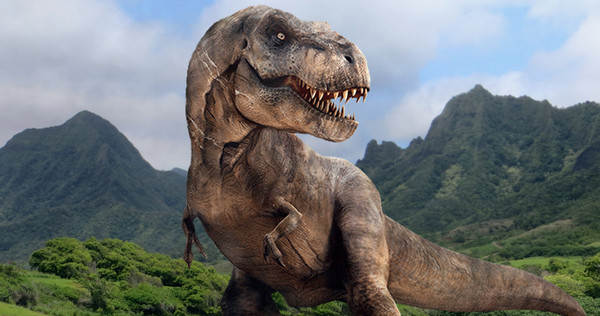
My wife and I went to see “Jurassic World” last night because … well, we’re still not sure why. Maybe because we had a Groupon. Anyway, if you like special effects, dinosaurs, awful writing and wooden acting, then this is your movie.
As with all of the Jurassic Park movies, it’s a glorified Godzilla movie. Man messes with the natural order of things, creates a monster, monster goes out of control, many die, and in the end all agree that the whole thing was a bad idea. At least until the sequel.
This story line can work. It doesn’t work here because the plot is worn, there’s virtually no character development and the acting is beyond awful. As we mentioned during the Writers and Editors Workshop, sympathetic characters are a key building block in any story. Watching “Jurassic World,” I found myself rooting for every main character to be eaten by dinosaurs.
The story was completely predictable. No surprise plot twists, no interesting subplots. People run from dinosaurs and (spoiler alert) our plucky heroes somehow survive.
Maybe I’m asking too much from summer movies, which long ago devolved into video games. But I got angry watching “Jurassic World.” A good film — and any good story — respects the intelligence of its audience.
Take Pixar, which has produced some of the best storytelling of our generation. Movies like “Toy Story” or “Up” build around themes like growing up, or loss. Pixar’s latest, “Inside Out,” is an ingenious take on the emotions surrounding a family’s long-distance move.
The reason those Pixar films become beloved classics, while self-proclaimed blockbusters like “Jurassic World” wind up in the markdown bin, is storytelling. Identify a powerful, universal theme and you can build any crazy world you want to contain it.
Those two elements — strong characters and universal themes — propel true stories of God’s work, too. Then, and only then, add a monster (something bad that must be defeated). Now you have a recipe for something memorable.
Jesus’ parables contain strong characters, universal themes and yes, monsters. It’s why those stories are as easily relatable today as they were 2,000 years ago.
Skip right to the monsters and all you have is a video game.
 At the ministry where I work, one of our leaders talked last week about quieting ourselves so we can hear God’s voice – and how quieting ourselves is so rare in our culture today. It made me think of Gene Weingarten’s 2007 Washington Post story. The Post sent world-renowned violinist Joshua Bell into a DC subway station to act as a street musician — and to see how many people would stop to listen.
The result was one of the best things I’ve ever read. It never directly mentions God, but God speaks loudly through this story. It also won the Pulitzer Prize for feature writing. I go back and read it at least once a year because it refreshes my soul.
As you read it, notice how deftly it moves between dialogue, scenes and background. You learn a lot by reading this story, but it’s all within a narrative that keeps things moving quickly. Notice the pacing – especially how the quotes from passersby are done in short sentences and paragraphs.
And then, just enjoy the piece as a reader and listen for what God might be saying to you.
* * *
Here’s a longer piece I wrote about this story in 2010. And here’s a follow-up story from the Post. Bell played another concert in a subway station last fall — not so secretly this time — and things looked quite different.
 Even the best interviews often start off a bit awkwardly as you’re getting to know your subject and discerning his vibe.
Depending on the subject, you can find a hundred different trails to success. One good way to turn an interview from awkward to undoable, though, is to ask “Yes” and “No” questions.
“Was that a good experience?”
“Yes.”
“Did you know that was going to happen?”
“No.”
“Would you do it that way again?”
“Yes.”
If running quotes like that doesn’t get you fired, it definitely won’t get you re-tweeted.
Rather than paint yourself into a corner, ask open-ended questions that get your subject talking about themselves and their memories and the topic at hand. Here’s are 13 “Open-Enders” that will get you the background and the quotes that will make your interview count — and your article worth reading.
 | campbelltoksave on Inside jargon, outside vo… |
 | Jim Killam on How to tell a dangerous s… |
 | Kristine Meyer on How to tell a dangerous s… |
 | Steven Doerr on 2019: Year of the Shed |
| campbelltoksave on Brevity on the Battlefiel… |
| campbelltoksave on Inside jargon, outside vo… |
| Jim Killam on How to tell a dangerous s… |
| Kristine Meyer on How to tell a dangerous s… |
| Steven Doerr on 2019: Year of the Shed |
| campbelltoksave on Brevity on the Battlefiel… |
 Go Tell It
You must be logged in to post a comment.