Says Who?

keep-calm-and-do-what-simon-says-2At the missions organization where I work, we’re moving toward using “says” rather than “said” most of the time for attribution in stories.

The reason is part of our gradual change in voice. “Says” helps build drama. It helps build scenes and narratives that readers can immerse themselves in. There’s a currency about “says.” It’s breezier. Present tense is more like watching a movie, and that’s the feel we want whenever possible.

Now, not every piece needs to read that way. If we’re writing something that’s less of a feature story and more of a fund-raising rationale, “said” might read better. “Said” is sometimes better for authoritative quotes or paraphrases, where instead of building a scene we’re constructing a case.

Sometimes in feature writing we’ll mix present and past tense. It’s a way to show that a person is telling us the story now, but referring to something that happened in the past. Here’s an example from a story I just wrote from Russia. Dasha is talking about the church service where she accepted Christ 15 years ago:

As the service ended, people greeted each other. They greeted Dasha, too, with smiles and hugs.

“And the pastor came up to me. I was still worried that he would rebuke me, but he didn’t. He said, ‘Dasha, I’m so glad that you are here. Do you want your life changed?’”

“Yes, I want that.”

The pastor invited Dasha to make a decision.

“I accepted Jesus Christ,” she says. “It was the moment that my life totally changed. I understood that there is a God — not just God, but a Father who loves me so much. And I am not alone in this world.”

Here’s a deeper discussion about this from Chip Scanlan of the Poynter Institute:

http://www.poynter.org/news/media-innovation/84087/ask-chip-says-vs-said/
 

Posted in Writing | Tagged , , | Comments Off on Says Who?

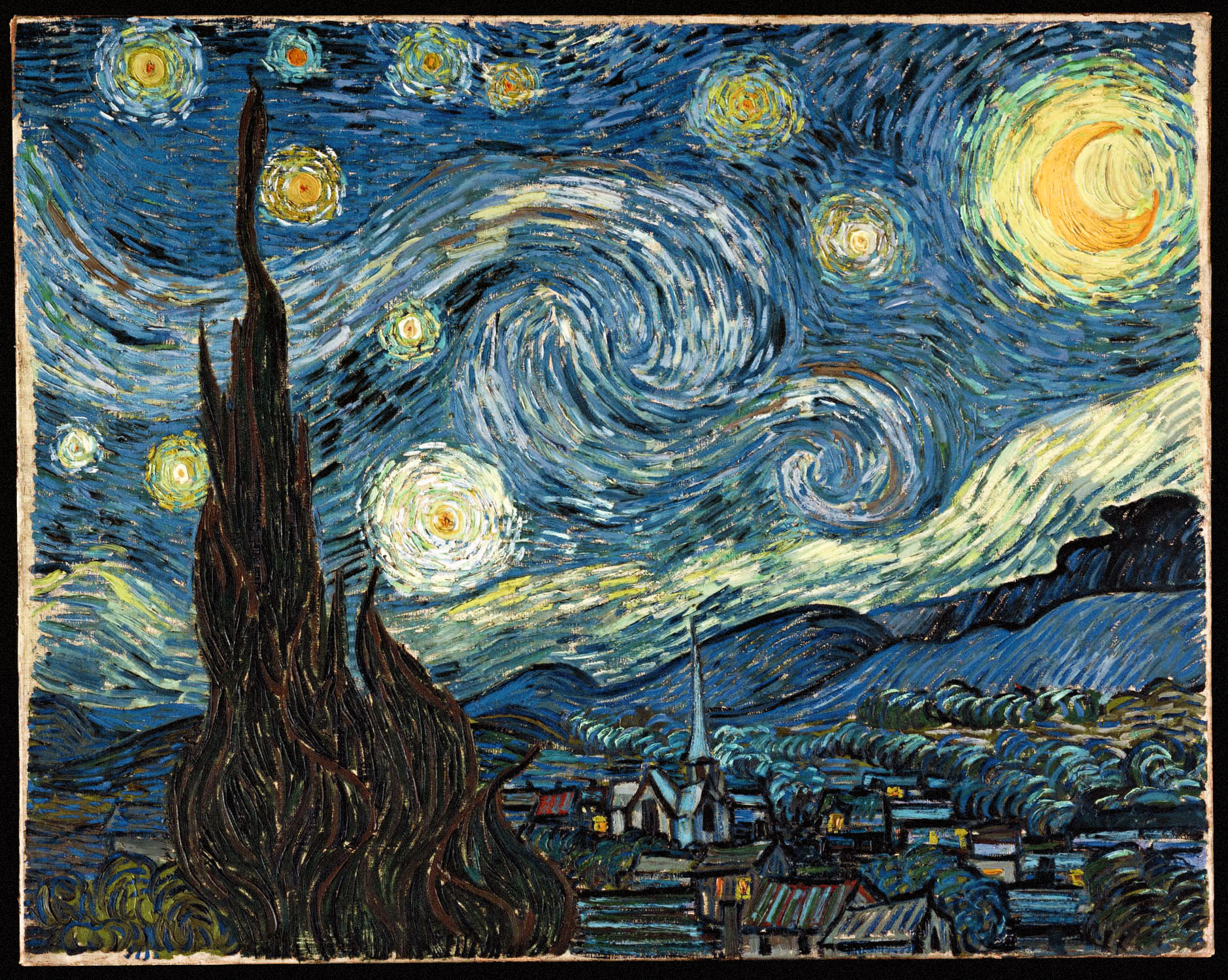
Starry, Starry Night

"Starry Night" by Vincent Van Gogh

“Starry Night” by Vincent Van Gogh

I spent Monday and Tuesday visiting a friend and his wife at their mountain home above Taos, N.M. They live almost 9,000 feet above sea level, and one unexpected highlight was stepping outside about 10 p.m. The sky was clear. As our eyes began adjusting to the darkness, the stars came into view.

About a minute later, they really came into view. The moon was just a sliver, and no city lights competed. The only other light came from the stars — thousands upon thousands filling the sky, horizon to horizon, as bright as I’ve ever seen them.

I thought about the people who first worked with the Hubble Space Telescope, and how those first clear pictures must have made their knees buckle in awe. Even from a dark mountainside, a glimpse of the universe took my breath away.

It took some searching to locate familiar constellations like the Big Dipper — not because their stars were hard to see, but because so many more-distant stars shone behind them. The farthest-away star in the Big Dipper is about 105 light years from Earth. The hundreds of stars suddenly visible directly behind it — who knows? That means we were looking back in time hundreds, maybe thousands of years as the light from those stars finally reached our eyes.

I thought about what it would have been like to live before electric lights, and to watch a show like this every moonless night from anywhere in the world. You begin to understand how mythology developed around the stars and constellations … how the stars inspired painters and poets.

You understand why the Psalmist wrote: “The heavens declare the glory of God.”

The moment reminded me something as a writer, too. As we report stories from someplace we can’t settle for one cursory look around. Wait. Pray. Eliminate distractions. Let your eyes adjust.

What you begin to notice will astonish you.

Posted in Faith, Writing | Tagged , , | Comments Off on Starry, Starry Night

A Writer’s Mission

newspaper-boy-1Quick: What’s the goal in any story we write about ministry?

Show readers what God is doing in a particular place? Further the mission of Bible translation? Further the Great Commission? Engage people? Inspire more prayer and funding for a particular project or cluster?

Sure, all of that. But above those stands a much simpler thought.

Show them Jesus.

Not just “tell them about Jesus.” Show them Jesus.

How do we do that?

I’m part of a group at work that’s going through a study book called “Missional Essentials.” The book’s central focus is discovering what a life of mission looks like.

Isaiah 61:1-2 lays out the Messiah’s mission statement. At the outset of his public ministry, Jesus quotes the passage (Luke 4:18-19). So if we were to create a motivational poster, we’d use these bullet points:

  • Bring good news to the poor.
  • Comfort the brokenhearted.
  • Proclaim that captives will be released.
  • Proclaim that the blind will see and the oppressed will be set free.
  • Tell those who mourn that the time of the Lord’s favor has come.

Familiar stuff. But later, Jesus makes his mission our mission: “As the Father has sent me, I am sending you.” (John 20:21).

Back to the mission statement. Look at the verbs: Bring good news. Comfort. Proclaim. Tell.

See the clear connection to our roles as writers and editors?

If we ever doubt how we can show Jesus to readers, there’s our answer. Take readers to places where we can show God’s people doing anything on that list. Even if we haven’t physically been to the place ourselves, we can use reporting and interviewing skills to gather observations and details, and to build accurate scenes and dialogue.

That makes us messengers of the Gospel in a powerful way we might not have thought about before. We are telling previously untold stories of God at work. Sounds a lot like these instructions:

“Publish his glorious deeds among the nations. Tell everyone about the amazing things he does.” — Psalms 96:3 (NLT)

Posted in Faith, mission, Story, Writing | Tagged , , , , | Comments Off on A Writer’s Mission

Creative fuel

ragamuffin2

Sometimes when I need a creative boost as a writer, I’ll get around people who are hyper-creative in other fields. Photographers, videographers, artists, musicians, designers, inventors, entrepreneurs. People who look at life differently and deeply … who see things that others miss. Sometimes those are people I know. Other times I know them only through what they’ve created.

During last weekend’s ice and snow event here in Texas, my wife and I spent a little extra Netflix time and stumbled onto “Ragamuffin.” It’s a film about the life of Rich Mullins. Three days later, I’m still thinking about it. What walloped me was not so much Rich’s music — though he might have been the best songwriter of his generation. It certainly wasn’t the film’s quality — better than most Christian films but still not great. It was Rich’s words, delivered almost verbatim from talks he gave at his concerts.

Rich liked to challenge conventional thinking, especially within the church. Legalism and false piety made him crazy. He always brought the message of Christianity back to the simple truth that Jesus loves us, no matter what.

Mitch McVicker, the band member who was with Rich when he died, calls him “The greatest communicator of grace that I’ve known.”

Here’s another good look at Rich Mullins’ life in a documentary film called “Homeless Man.”

Then, once the ice melted last weekend, several of us attended the Southwestern Photojournalism Conference in Fort Worth. Saturday night’s keynote speaker was photographer Dave Black. His topic: passion.

Dave’s passion isn’t fueled by seeing his work published — and this is a guy who covered 12 Olympics for Sports Illustrated. “Adrenalin comes from the joy of making a picture,” he said.

In other words, it’s about the creative process — not the audience’s response. Often, though, one naturally follows the other.

Artists express what’s hard for others to put into words. We need them to make us think, to challenge us and to get our own creative side moving again.

Who or what puts you into a creative mode?

Posted in Faith, Photography, Writing | Tagged , , , | Comments Off on Creative fuel

Wienermobile crash causes heartache

Wienermobile crashHARRISBURG, Pa. — Choking back tears, local processed meat lovers outside Pennsylvania’s capital bid farewell to an old friend — the local Oscar Meyer Wienermobile.

The Wienermobile crashed outside a popular local deli on Sunday afternoon, just after lunchtime. Efforts to revive the Wienermobile failed, and local mechanics reported the vehicle dead on the scene. Traffic was clogged for miles on one of the city’s main arteries as crews worked feverishly to clear out the blockage.

No injuries were reported in the crash, which occurred after veteran Wienermobile driver Roger Krasinski, driving alone, lost control of the vehicle while grilling a variety of hot dogs, bratwurst and other sausages over the passenger seat. Krasinski told police that the Wienermobile’s state-of-the-art ventilation system was overwhelmed with grease and microscopic sausage particles, causing the cabin to fill with a wonderful, sweetly aromatic smoke. The smoke blocked Krasinski’s vision and caused him to slam into a telephone pole, which he reported looking remarkably like a summer sausage.

Posted in Uncategorized | Comments Off on Wienermobile crash causes heartache

Wonder in a Butterfly’s Wings

bluebutterfly-web-7215

This is a blue morpho butterfly, native to Central and South America.

My wife and I spent part of Saturday at Texas Discovery Gardens, next to the Cotton Bowl in Dallas. The gardens’ featured attraction is the two-story Butterfly House and Insectarium, an indoor tropical rainforest fluttering with hundreds of butterflies.

Morphos are hard to photograph because you typically only see their blue wings when they’re flying. Rarely will a morpho rest with its wings spread flat; usually they’re folded and you can only see the brown, camouflaged underside. For whatever reason, this one lighted on a concrete post for a few minutes Saturday, revealing a secret to my camera that my eye would have missed.

Its wings aren’t really blue. They’re iridescent. Think of the spectrum of colors you see in a soap bubble. Now add microscopic scales, each reflecting light, covering the wings. The result is a funhouse mirror effect. What you see in the photo is a reflection of the sky and trees.

That’s astounding.

What does any of this have to do with writing stories? Good writers, I think, carry an eye for detail and a supreme sense of wonder. They notice details, surprises, story angles that others might miss. Some seemingly insignificant moment or mundane attribute might provide a means to write something deeper.

So, the contents of a debris pile outside a flood-damaged house become a symbol for a family’s emotional loss. A picture in a pastor’s office of Jesus washing His disciples’ feet provides a glimpse into a servant’s heart.

Or, an iridescent butterfly wing becomes a portal to the wonder of God’s creation.

You just have to develop an eye for it. Rich Mullins nailed it in his song, “Here in America”:

And there’s so much beauty around us for just two eyes to see.

But everywhere I go I’m looking.


Posted in Reporting, Story, Writing | Tagged , , , , , | Comments Off on Wonder in a Butterfly’s Wings

The Old Man and the App

OLYMPUS DIGITAL CAMERAAmong the best self-editing tools I’ve ever seen is “Hemingway,” an app that helps you write like Ernest Hemingway. Well, sort of. The app — $6.99 at http://www.hemingwayapp.com — analyzes any piece of writing for simplicity. Short sentences. Plain language. Active voice. Strong nouns and verbs. Few adjectives. No adverbs.

The app then creates a readability rating based on grade level, and color-codes areas for improvement. Most good writing for a mass audience rates about eighth- or ninth-grade level.

Lower is better yet. The opening to a 1991 Sports Illustrated piece by my favorite writer, Gary Smith, gets a second-grade rating:

Singing. Did you hear it? There was singing in the land once more that day. How could you not call the Crows a still-mighty tribe if you saw them on the move that afternoon? How could your heart not leave the ground if you were one of those Indian boys leading them across the Valley of the Big Horn?

It was March 24, 1983, a day of thin clouds and pale sun in southern Montana. A bus slowed as it reached the crest of a hill, and from there, for the first time, the boys inside it could see everything. Fender to fender stretched the caravan of cars behind them, seven miles, eight – they had made the asphalt go away! Through the sage and the buffalo grass they swept, over buttes and boulder-filled gullies, as in the long-ago days when their scouts had spotted buffalo and their village had packed up its lodge poles and tepee skins, lashed them to the dogs and migrated in pursuit of the herd.

But what they pursued now was a high school basketball team, 12 teenagers on their way to Billings to play in a state tournament. The boys stared through their windows at the caravan. There was bone quiet in the bus. It was as if, all at once, the boys had sensed the size of this moment … and what awaited each of them once this moment was done.

 “A writer’s style should be direct and personal, his imagery rich and earthy, and his words simple and vigorous,” Hemingway wrote in the January 1963 Playboy magazine (back when some really did read it for the articles). “The greatest writers have the gift of brilliant brevity, are hard workers, diligent scholars and competent stylists.”

Funny. The Hemingway app rates that two-sentence paragraph only as “OK” — 13th-grade reading level.

Here’s a piece from Writer’s Digest about Hemingway’s writing style.


Posted in editing, Writing | Tagged , | 2 Comments

The Power of Being Invisible

Book recommendation: “Invisibles: The Power of Anonymous Work in an Age of Relentless Self-Promotion,” by David Zweig.

invisiblesI’m just starting this one, but the title alone sold it for me. In his introduction, Zweig writes:

“… I was fascinated by people who chose to do work that required extensive training and expertise, that was critical to whatever enterprise they were a part of, yet knowingly and contentedly, they rarely, if ever, were known by, let alone received credit from, the outside world for their labor. What makes Invisibles so captivating is that they are achieving enviable levels of fulfillment from their work, yet their approach is near antithetical to that of our culture at large.”

The idea of doing important, meaningful work without receiving any notoriety runs against a culture where even the most mundane daily tasks get posted on social media for audience approval.

Two points come to mind as they relate to journalism.

  1. We are in the wrong business if we write or edit to seek applause. It’s nice when that happens (more often for writers than editors), but it can’t be our primary motivation. As a team we applaud each other internally, and want to do more of that. Often, though, when we’ve done our best work, we are indeed invisible.All of which fits very nicely with Colossians 3:23:  “Whatever you do, work at it with all your heart, as working for the Lord, not for human masters …”
  1. As we identify people and their stories, the best tend to be those that the world has overlooked: Not the famous entertainer, but the one who drives the tour bus. Not the pastor, but the parent sitting with a special-needs child in the back row.

Everyone has a story. The biggest sense of fulfillment I get as a journalist is to listen to someone’s story and then retell it, for the first time, in words, photos or video.

All while remaining invisible and letting God get the applause.

Posted in Reporting | Tagged , , | Comments Off on The Power of Being Invisible

Glimpses of home

Christmastime brings a great reminder of one of the most impactful story elements: surprise.

C.S. Lewis loved the term sehnsucht. The German word has no English equivalent. Roughly, it means a longing “to find the place where all beauty came from.” It’s a deep longing for home, or what ought to be home. We often fail to recognize it. Even when we do, we aren’t quite sure what to do with it.

But … sometimes amid the humdrum of life, we get jolted with a tiny preview of heaven. A spectacular mountain sunset. A newborn baby. Viewing a great work of art. Feeling hope that the Cubs may actually win the World Series in my lifetime. They’re glimpses … like watching a too-short trailer for a great movie we’re anticipating.

Now imagine what those shepherds in Bethlehem must have experienced. First one angel appears with the best news ever reported. Then the armies of heaven – a multitude of angels – show up to celebrate. The shepherds received more than a fleeting glimpse of home; they got more than they could comprehend. That night, heaven unmistakably showed up.

John 1:14 talks about the Word, Jesus, coming to live among us, moving into the neighborhood. That’s happening today in every mission work we write about – even if we can’t see armies of celebrating angels. It’s a matter of identifying those glimpses and how they impact people, neighborhoods, communities. God loves to surprise people. Find one of those stories and tell it well – through the eyes of the person experiencing it – and you’ve illustrated John 1:14.

The video below has received more than 45 million hits since 2010, so chances are you’ve seen it. It’s worth watching again through the eyes of a journalist. Note the bystanders’ faces. That’s the power of surprise – of God breaking into the mundane. It’s a glimpse of home.

Posted in Reporting, Story | Tagged , , , , | Comments Off on Glimpses of home

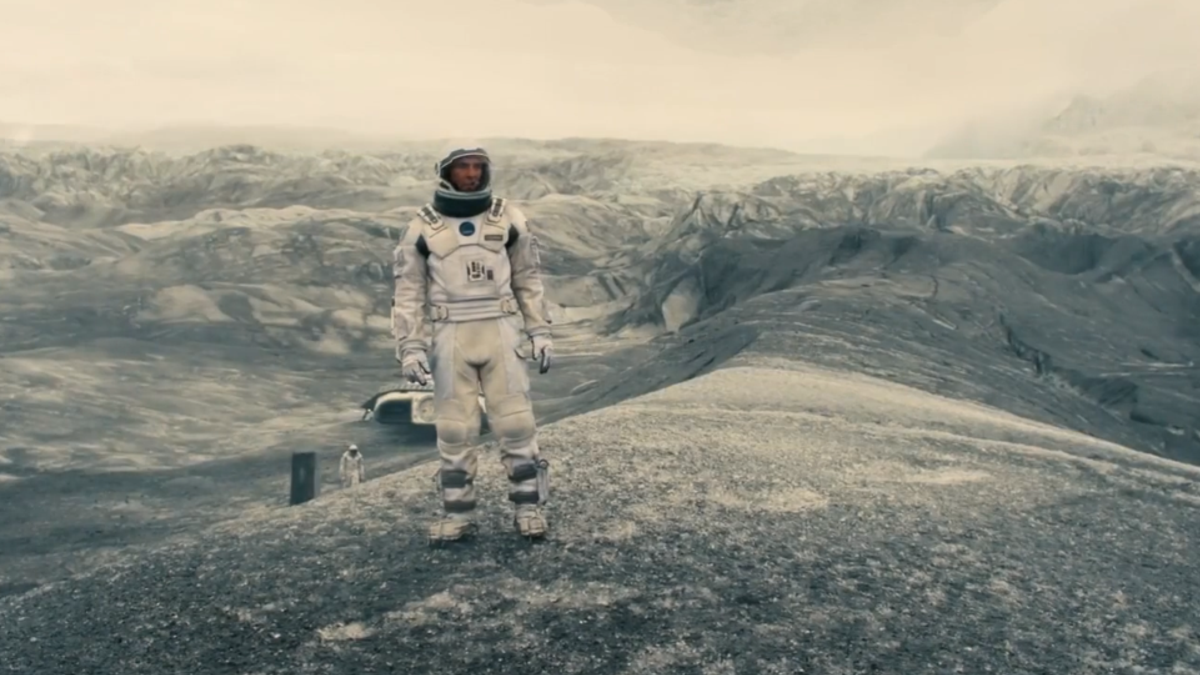
Story, simplicity and wormholes

Paramount Pictures / Warner Bros / Legendary Pictures

Paramount Pictures / Warner Bros / Legendary Pictures

I saw “Interstellar” with one of my sons last week. Up until the last 30 minutes I thought it was one of the best movies I’d ever seen. But the ending made my head explode.

Here’s a good line from a review I stumbled upon by Bob Bloom of the Lafayette (Ind.) Journal and Courier: “The movie is complex and maddening, filled with concepts over the heads of most mere mortals, yet grounded in barely enough humanity to stimulate our senses.”

A good test of whether a story works for a mass audience is: How simply can you boil it down? Most good stories involve a sympathetic character who wants something and has to overcome obstacles to get it. Without giving too much away, here’s how “Interstellar” boils down:

Earth is in trouble. An astronaut gets chosen to help find a new home planet, but he has to leave his kids behind. The rest of the movie involves his struggle to return. And a lot of astrophysics.

This is a useful exercise with any story we write, to be sure readers can decipher it quickly. Headline writers do this for a living.

Taken to ridiculous extremes, this also becomes a fun party game. See if you can guess these movies from their oversimplified plots:

  1. Bored kid who forgot his coat wants some candy. Many die.
  2. A short guy gets sent to return some jewelry and finds adventure along the way.
  3. A powerful but unhappy man misses his self-propelled snow vehicle.
  4. Elderly man who worries about the weather takes extreme measures.
  5. Brash young man accidentally kills a goose, but gets over it.


Answers below.


Movie plot answers:


  1. The Lion, the Witch and the Wardrobe
  2. Lord of the Rings
  3. Citizen Kane
  4. Noah
  5. Top Gun


Posted in Story | Tagged , , , , | Comments Off on Story, simplicity and wormholes