A cup of narcissism to go, please

Coffee_to_go_cupAs I sipped my coffee the other morning, the earth-toned cup sleeve burbled a soothing affirmation: “You are here not to shrink down to less, but to blossom into more of who you really are.”

What a sweet little me-fest: “More of who I really am …” Too bad it’s more of what the world needs nothing more of.

For the bulk of middle class caffeine sippers who’ve read it, this bit of squishiness probably sounds OK. What’s not to like about sweetly-worded narcissism? But what if instead of college students and soccer moms, this slogan were pasted on the coffee cups of, say, serial rapists? How much sense would it make then? Does the slogan’s author really want hardened criminals blossoming into more of who they really are?

In pondering the self-indulgence of this quote, I’m led to wonder what John the Baptist would say if he saw it. This was a guy who, when confronted with the truth of Jesus Christ’s (temporary) rise in popularity at his expense, famously said in John 3:30, “He must increase, but I must decrease.” As word of Jesus and His miracles spread, I imagine an American marketer might have told John the Baptist to start strengthening his personal brand. You know, hire a PR agent. Get some press. Work the channels.

As it was, the only channels that John worked were in the Jordan River. The only brand he was interested in promoting was that of Jesus, for whom he was sent as a prophet and herald. Instead of wallowing in squalid self-promotion, John embraced the rich, sacred call of Christ, all the way to his martyr’s death at the hands of the local narcissism champ himself, Herod Antipas.

We can’t swallow the lie of this seemingly benign slogan, “You are not here to shrink down to less.” Actually, yes we are. That’s what John the Baptist understood and the slogan’s author (quite a polished narcissist herself) apparently does not. The world doesn’t need more champions of self. What it needs is more people willing to embrace the sacred call of self-denial.

But what kind of coffee sleeve would that make?

Posted in Culture | Tagged , , , , | Comments Off on A cup of narcissism to go, please

O.J., TV and wretched excess

CNN

CNN

The TV networks already are rolling out their programming for the 20-year anniversary of that slow-speed freeway chase involving O.J. Simpson, Al Cowlings and the white Ford Bronco. June 17, 1994, revealed some of the absolute worst about celebrity-obsessed American culture:

  • Our macabre fascination with a hero in the act of falling. Would the NFL hall of famer and broadcaster kill himself on live television? And wouldn’t that just be the most amazing thing we’d ever seen?
  • The bizarre, carnival atmosphere that quickly developed in Los Angeles. People parked along freeway overpasses, cheering and waving homemade signs as the Bronco – and the TV cameras – passed.
  • The “Biggest Story of Our Lives,” watched by almost half the country though it didn’t affect any of us directly.
  • The Kardashians. Simpson’s friend, Robert Kardashian, read what sounded like a suicide note from O.J. This was America’s first exposure to the first family of wretched reality TV.
  • And that the ensuing trial not only would degenerate into an out-of-control spectacle, but also a referendum on race relations in America.

Nearly lost in the evening’s reality-TV spectacle was the fact that, in true reality, two people had been horribly murdered. Instead, it was all just celebrity theater. Television breathlessly served it to an audience that wanted to devour every lurid second.

Twenty years later, what can we learn from it all? The Simpson case marked a tipping point when seedy celebrity news, which had mostly been confined to trashy tabloids, forced itself into the mainstream. Why? Because the public appetite for it is insatiable. It’s easier to sell people candy than broccoli. Wall-to-wall O.J. news displaced serious news from around the world; most Americans weren’t aware of the Rwandan genocide until months or years later. Its absence from our public consciousness was a big reason the West didn’t intervene. As many as a million Rwandans died.

For those of us looking to tell God’s stories in a post-Christian culture, I think the lesson is simply this: Follow the crowds only when you have to. Render unto CNN and TMZ and People Magazine, and then go the other direction. Tell the stories no one else is telling. Even when it feels like they’ll be drowned out by the noise.

Posted in Culture | Tagged , , , , | Comments Off on O.J., TV and wretched excess

In disaster aftermath, God’s stories don’t stop

I’m writing this on an airplane after spending the past two days in Covington, Louisiana, helping to train ReachGlobal’s Crisis Response staff to be reporters. Of all mission work, crisis response offers some of the best opportunity for bragging on God: telling people what he’s up to and how they can get in on it. It was fun to work with a group of compassionate people who get that idea.

Hurricane Sandy Relief: Staten Island, N.Y. from EFCA ReachGlobal on Vimeo.

In the first few days after a flood, a tornado, a hurricane or other natural disaster have turned people’s lives upside down, the big media descend. Stories of tragic death and miraculous survival, of gut-wrenching loss and relentless hope, capture our attention. As those stories are delivered non-stop through TV networks, newspapers and online outlets, an outpouring of public support happens. Celebrities do benefit concerts. People feel godly compassion and many even act on it.

And then, the next big story arises and the big media move on. The needs in the disaster-stricken community haven’t lessened, but they become long-term. They don’t hold the nation’s attention any more.

Crisis response workers like ReachGlobal’s specialize in staying for the long haul (almost nine years now in New Orleans and southern Louisiana). They develop partnerships with local churches, organize relief teams and help people, house by house and block by block, rebuild their lives.

Every one of those people has a story worth telling. But the stories usually aren’t being told beyond the sphere of whatever local church that’s sent a team that week. After a few weeks or months, the relief effort begins to gasp for air.

But what if those stories were being told? What if crisis response staffers were trained to spot them, take a few notes and even shoot photos or video on their phones? If those otherwise-untold stories kept being reported on a regular basis, what kind of impact could they have?

We think it would result in a steady stream of prayer, giving, sending and serving. We think a lot of those stories would get shared, and shared again. And people would see real, right-now examples of God at work. All because mission workers realized that reporting God’s stories is a crucial part of their ministry work, and their agencies decided to equip them to do it well. All because they started taking Psalm 96:3 to heart: “Publish his glorious deeds among the nations. Tell everyone about the amazing things he does.”

Posted in Reporting, Story | Tagged , , , , | Comments Off on In disaster aftermath, God’s stories don’t stop

Heroes in the land

https://www.youtube.com/watch?v=gffpOUs3ia4&feature=youtu.be “The godly people in the land are my true heroes! I take pleasure in them!” – Ps. 16:3 (NLT)

Imagine if you could bring nine people you consider heroes into the same room and let them share their stories. They might tell you about risking their lives to save another, or persevering through hard times, or maybe standing up for what was right when no one else would. I would listen closely to their stories, certainly with a great deal of admiration.

But then I would bring in Hwaida Refaat, and I’ll bet everyone in the room would agree that she was the real hero as she told about what happened to her and her husband and her daughter.

On Oct. 20 of last year, Refaat’s 8-year-old daughter, Mariam, was killed outside a church in the Al-Warraq neighborhood of Cairo when militant Muslim gunmen rained bullets on her and a large group of people waiting outside a church during a wedding. Hwaida herself was shot six times in the legs. Her husband, Nabil, also was shot.

After surviving a brutal attack in which their little girl was killed, many parents (understandably) would call for revenge on the killers. Not Hwaida and Nabil. What they did on national Egyptian television as they forgave their daughters murderers … well, you can watch it for yourself.

The world needs a lot more people like Hwaida and Nabil, because bringing grace and forgiveness to the table that God sets up in the presence of your enemies does more to communicate the good news of Jesus Christ than a thousand sermons. The good news is that Jesus brought the kingdom of God to us and initiated the new covenant — the new covenant, written in His blood, that says that God forgives sinners who change their minds and ask Him for forgiveness.

Hatred and revenge fall down flat, prostrate, before the power of such forgiveness. And so it was in Egypt when Hwaida Refaat forgave her assailants — her daughter’s killers — on national TV. The civil war that her attackers had hoped to spark by attacking innocents outside a church? She snuffed it out by pleading that her attackers change their minds instead of demanding their heads. That’s grace in golden capital letters, and it helped an entire nation avoid becoming a hellish copy of Syria.

That’s heroism to me: Resisting evil in the name of Jesus, and then doing the unimaginable with the power of Jesus. When the victims of evil do what Jesus said to do and actually forgive their enemies, what can evil do but shrug its shoulders and cower in a dark corner where it belongs?

Posted in Uncategorized | Comments Off on Heroes in the land

Everyone has a purpose

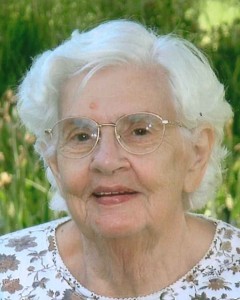
Grandma LambMy wife’s grandma, Vera Lamb, died recently at the venerable age of 89. The funeral, held last week on a rainy morning in rural Minnesota, celebrated the life of a woman who had raised nine children, lost an infant daughter, and lived to see multiple grandchildren each have multiple children of their own.

That’s a life.

Vera Lamb won’t go down in history as a great woman — at least not the history that gets dedicated Wikipedia pages and crammed over by procrastinating students. When you think about it, that’s not the kind of history that really matters, anyway. The history that really matters is the history written on the lives of ordinary people. As Jim wrote yesterday, “News (and therefore history) is always, always about people.”

I would argue that Vera was a great woman, indeed. What made her great? That she had a purpose, that she knew that purpose, and that she lived out that purpose with fantastic results. Her life as a mother, wife, friend and disciple of Jesus Christ mattered because living out those roles made an eternal personal difference in the lives of dozens — and by extrapolation, thousands — of human beings, all of whom were created in God’s image with divinely orchestrated work to do.

Ephesians 2:10 tells us, “For we are his workmanship, created in Christ Jesus for good works, which God prepared beforehand that we should walk in them.”

Vera walked that walk. Her husband knew it. Her children and grandchildren knew it (and testified to it last week). She lived her purpose to the full and was celebrated for it when it came time to bid her farewell.

And really, what more is there?

Posted in Story | Comments Off on Everyone has a purpose

The stream and the banks

Historian and philosopher Will Durant liked to see the big picture. The history of the whole world, for instance. Between the 1930s and the 1970s, he and his wife, Ariel, wrote an 11-volume opus called “The Story of Civilization.” They both died before they could finish it, so the series ends with Napoleon.

Photo by Jim Killam

Photo by Jim Killam

Yet, even when trying to tell the broadest story imaginable, the Durants knew it was a series of small stories, told well – maybe even stories that seemed insignificant at the time. His writing style differed from most historians, who often dismissed him because regular people could read his work and understand it.

Will Durant’s New York Times obituary in 1981 mentioned his efforts to “personify processes and events”:

”We believe that in the last hundred years history has been too depersonalized,” he once said, ”and that statistics have replaced men in the story of mankind. History operates in events but through persons; these are the voice of events, the flesh and blood upon which events fall, and the human responses and feelings are also history.”

In reporting about God’s work around the world, we would do well to remember Durant’s focus. News (and therefore history) is always, always about people. And, if we look carefully, the best stories are found less often in the palaces of kings and more often at kitchen tables, farm fields, hospital rooms and refugee tents. Not coincidentally, the first-century equivalents were the types of places Jesus chose to spend most of his time.

“Civilization is a stream with banks,” Durant once said. “The stream is sometimes filled with blood from people killing, stealing, shouting and doing the things historians usually record; while on the banks, unnoticed, people build homes, make love, raise children, sing songs, write poetry and even whittle statues. The story of civilization is the story of what happened on the banks.”

Posted in Reporting, Story | Tagged , , , , | Comments Off on The stream and the banks

Life and death stories are the best

Human_Heart_and_Circulatory_SystemI talked to a statistic today. He’s doing well, all things considered.

My numeric friend has an office two doors down from mine. A few days ago, he survived a heart attack caused by full blockage of his “widow-maker,” the left anterior descending coronary artery. As the name suggests, most people in that traffic jam don’t find their way back home.

As people will, I asked about the incident, and he told me everything: The initial chest pain (“It wasn’t that bad,” he said), followed by extreme sweating and agitation; the call to the EMT’s; the EKG in the ambulance (“And … we’re going right now,” one of the EMT’s said abruptly when the first results popped up); the 85-mph dash to the hospital with his wife in hot pursuit; the first angioplasty, followed by a second a few hours later. The heart surgeon who met them at the door of the ER. Stents. Doctors conferring in his room. His conversation with God in the ambulance (“I know I should want to be in heaven with you, but I’m not ready to go yet …”).

I sat there enthralled. This was life and death and a speeding ambulance. This was a story.

Sitting there, listening to my friend retell his brush with death, I had the thought that this is the type of story that God wants us to tell each other all the time — how life wins over death. Good wins over bad. Evil breathes down your neck, and God swats it away.

Heart attack stories too often don’t end so well. My friend was blessed by God to be sitting in his chair catching up on email instead of lying in state, catching his wife’s tears. But really, wouldn’t he have been blessed either way? Certainly his wife and children and grandkids would have been heart-broken. We all would have been. But my friend’s story has a good ending waiting for him no matter what.

I think that’s why God’s grand story is the best one of all. Everyone who wants the either-or happy ending can have it.

Posted in Reporting, Story | Comments Off on Life and death stories are the best

Story criteria: Urgency of need

Before 24-hour cable news networks that label anything from a terrorist bombing to a celebrity divorce as “Breaking News,” news editors relied on The Associated Press. A big story would crossed the wire with the label, “URGENT.” Meaning: Pay attention because this is big news happening right now.

Residents of Glenhaven, Colo., face a long recovery after the September 2013 floods. Photo by Jim Killam

Residents of Glenhaven, Colo., face a long recovery after the September 2013 floods. Photo by Jim Killam

At Crossfield News, we pay a lot of attention to another kind of urgency: ministries and relief efforts in critical need of help. A good example is crisis response – often involving natural disasters like hurricanes, floods, earthquakes or tornadoes.

Typically what happens as a disaster unfolds is that “big” media converge on the place and stay for a few days. (Think: TV reporters standing on the beach as a hurricane approaches.) The story occupies the world’s attention for those few days, and the victims are showered with help – sometimes more than they can immediately use. Celebrities hold concerts. People donate money by texting.

And then … most people forget all about it. The media circus moves on to the next town and the next crisis. Right now it’s wildfires in California and floods in southern Europe. Next week, who knows? Meantime, when was the last time you saw much attention given to people recovering from those tornadoes in Arkansas, or the floods in Colorado, or Hurricane Sandy in New Jersey and New York. Or, for that matter, Hurricane Katrina in New Orleans?

So, a major story criterion for Crossfield News is urgency of need. We’re not so focused on providing breaking-news coverage of disasters. Plenty of other media already do that well. But when the public’s attention turns elsewhere and critical, long-term needs remain, that’s the type of urgency we look for. What kind of help is needed? Who needs to hear that message? And what stories are happening house by house, block by block?

Christian ministries are among the best at understanding the challenges communities face after disasters. Never is God’s compassion more fully on display as when Christians make a long-term commitment to helping a community recover. An effort like that requires manpower – and it requires letting people know about that need. Especially when no one else is telling that story.

Just because a story doesn’t say “Breaking News” doesn’t mean it isn’t urgent – especially for the people living it.

Posted in Story | Tagged , , , , , | Comments Off on Story criteria: Urgency of need

Blessed assurance

Editor’s note: This guest post is by our friend Jennie Anderson, who recently attended the Evangelical Press Association convention in Anaheim, Calif.

What did I learn at the convention?

Photo by Jim Killam

Photo by Jim Killam

To be completely honest, what I learned was not gleaned from the speakers, the worship leader or the workshop presenters. While they prompted my imagination and provided practical thoughts for advancing my understanding in the world of communication, what I gained from the convention was a confidence in telling my story.

I do not have any formal education in the area of photography or reporting. So, walking into Sheraton Park’s terrace, laced with Christianity’s leading editors, writers, and designers, I felt more than inadequate with my measly stack of homemade “business” cards. What was I doing here? 

Entertaining the idea of serving Crossfield News as its newest photographer and reporter was a stretch of my imagination; yet I was confident that I was meant to attend the convention. During Easter weekend, two weeks before the convention, an excitement bubbled in my heart. As I discussed the opportunity with my parents and prayed for guidance, the roadblocks fell before my eyes in just a matter of days. One by one, every reasonable excuse for not planning a trip from Minnesota to California in two weeks’ time vanquished. The door was open. So, why not?

I reminded myself throughout the course of the convention that this was exactly where God wanted me. And though I wasn’t exactly sure what I was meant to learn during my time there, I had to trust there was purpose.

As of last Sunday, five days after the convention, I still had a difficult time expressing to others exactly what I had learned. If I was convinced God had me there on purpose, why wasn’t the lesson crystal clear? 

But as I write this on Monday morning, I know without a doubt the answer to that question. I simply learned the value in confidently telling my story.

While I counted down the minutes before boarding my flight back to Minnesota, I scanned the gate’s waiting area hoping to spot a handsome young man who was sure to wind up in the seat next to mine for the four-hour trip. I had yet to experience that “blessed assurance” – God’s ultimate purpose in bringing me to the convention. Since it hadn’t happened at the convention, surely he was ready to introduce me to my true love on the flight home.

C’mon. Don’t tell me you’ve never hoped for that movie moment! 

I filled my blue Nalgene in preparation for the flight, asking God to seat me next to that handsome young man. I always manage to get stuck between two old men with musty body odor or next to an adorable baby with an amazing lung capacity. Surely it wasn’t too much to ask – just one handsome young man in seat 20A. Please, God? 

Okay, fine. Maybe that isn’t the prayer I should send heavenward. It’s not exactly what Jesus would do.

“So, God, I guess I’ll leave the seat arrangement up to you. You know best, anyway,” I prayed.

There. I did it. 

As I settled into my middle seat – I really was hoping for a spot next to the window – I mentally prepared for a relaxing few hours of reading and sleeping.

And then it happened.

The guy next to me made a comment. And of course, I had to respond. So much for that nap. 

That four-hour nap turned into a four-hour conversation. And that desired movie moment quickly became a God moment.

Mr. T is a 27-year old from Sri Lanka. Though he has spent the past 10 years living with his family in California, he was greatly anticipating a four-day reprieve from his parents’ watchful eyes. He could not wait to visit his graduating friend, drinking in celebration to his heart’s content.

The hours passed and T continued to openly share his story: his struggle with the English language, his love for his home country and his feigned guilt for hiding his drinking from his mom and Buddha. We laughed about his fear of skiing and ice skating, and I even taught him how to play the game “Never Have I Ever.”

And then I realized that Mr. T was the answer to my prayer. I had asked for God to arrange the seating, right?

The pilot announced we were preparing for landing, and before I lost all confidence, I asked T if he had ever read the Bible. He laughed, and claimed he didn’t like to read.

Of course. 

“So, how do you like to learn then, if you don’t read?” I asked.

“I like to learn by other people. You know, talking to them.”

Oh bother. Thanks, God. 

As our ears popped and the lights dimmed in the final descent, I fumbled my way through my story of life and faith in Jesus Christ. I told him about the freedom I had experienced in grace. Knowing Jesus was not so much a list of do’s and don’ts, as T knew under the watchful eye of Buddha; rather it was an opportunity to honor God in my choices (as much as it sucks sometimes) and to love others in truth.

T looked at me with wide eyes, the wheels turning.

“I feel so free, listening to what you say,” he said.

“Can I pray for you, T?”

He looks at me with puzzled eyes, “Sure, what do I do?”

“Just close your eyes.”

And I prayed. I have no idea what was voiced, but my inner prayer was simple: God, reveal yourself to T. May he come to experience freedom in You. 

The plane landed, and as the other passengers began to rustle about in their seats, T leaned his forehead on the seat before him. He was quiet, thinking. He then turned to me, and asked what church I go to. I told him I currently attend a Baptist church, and his eyes lit up in understanding. He had met a Baptist pastor while volunteering for a student event years ago. Perhaps he would go to him while visiting his friend in Minnesota.

“I can’t talk to my mom – she’d kill me – and the Buddhist priest just says prayers over me. Do you think the pastor would want to talk to me?” he asked.

Oh, would he ever! 

As we walked together toward the baggage claim, I encouraged him to talk to this pastor and to email me if he had any questions.

“You mean I can ask you any question?”

“Yes, of course.”

I said goodbye to Mr. T with a hug and a prayer.

And this morning, as I reflect on what I learned during the convention, I know what I will answer.

The convention served as a foundation in establishing that “blessed assurance.”

What about you? Are you willing to be bold and confident in obediently and passionately telling the story God is calling you to share?

Whether my story develops on a four-hour flight or in a photograph from one of Costa Rica’s slums, I am learning to be confident.

Blessed assurance, Jesus is mine!
O what a foretaste of glory divine!
Heir of salvation, purchase of God,
Born of his Spirit, washed in his blood.
This is my story, this is my song,
Praising my Savior all the day long.


 

Posted in Career, Faith | Tagged , , , , , | 1 Comment

The iPad and Professional Journalists

The iPad for Professional Journalists

If you’re an iPad user, or thinking about getting one for journalistic work, here’s a useful blog post from iPad Appstorm.

Posted in Technology | Comments Off on The iPad and Professional Journalists